Dragon riders are everywhere. A $2 billion movie franchise. The fastest-selling adult novel in twenty years. One of the most beloved D&D settings ever created. All of them are built on a premise that, when you stop and think about it, is completely absurd.
If dragons existed, humans riding them would be ridiculous.
And yet, dragon riders remain one of fantasy's most enduring and electrifying archetypes. So what's actually going on? And more importantly, how do you build a world where dragon riders make sense?
Let's dig into the evolutionary biology, the worldbuilding mechanics, and if you're a Dungeon Master, three concrete ways to say yes to a player who wants a dragon mount without blowing up your campaign.
Why Dragon Riders Don't Make Biological Sense
The problem starts with domestication.
Every large animal humans have successfully domesticated shares a recognizable set of traits. Anthropologist Jared Diamond outlined the checklist well: ideal domesticates tend to be herbivores (they need fewer calories and don't compete with us for meat), they provide labor or food, they're docile enough not to kill their handlers, they're slow or trappable in the wild, and they breed readily in captivity. Short lifespans help too, because selective breeding works faster across many generations. Strong herd instincts are a bonus. When you control the leader, you control the herd.
Now run dragons through that list.
Herbivores? Rarely. Most lore has dragons eating livestock by the flock. Docile? If "docile" means "unlikely to incinerate you," then no. Easy to catch? Absolutely not. Breeds in captivity? Dragon eggs are notoriously rare, and dragons live for centuries. Selective breeding on that timeline requires a multi-generational breeding program that makes the Habsburg dynasty look impatient. Herd instincts? Dragons are typically territorial loners who share neither space nor hoard.
In short: as wild animals, dragons are a catastrophically bad candidate for domestication.

Two Ways Out of the Problem
1. Change the Dragon's Nature
The most direct fix is to simply alter the lore. Maybe your dragons are curious, sociable creatures who breed frequently and tolerate human company. Peter S. Beagle's recent novel I'm Afraid You've Got Dragons takes exactly this approach. In his world, dragons are so prolific they're treated as household pests. That's a genuinely clever inversion of the usual dragon mythology, and it opens up all kinds of narrative and worldbuilding possibilities.
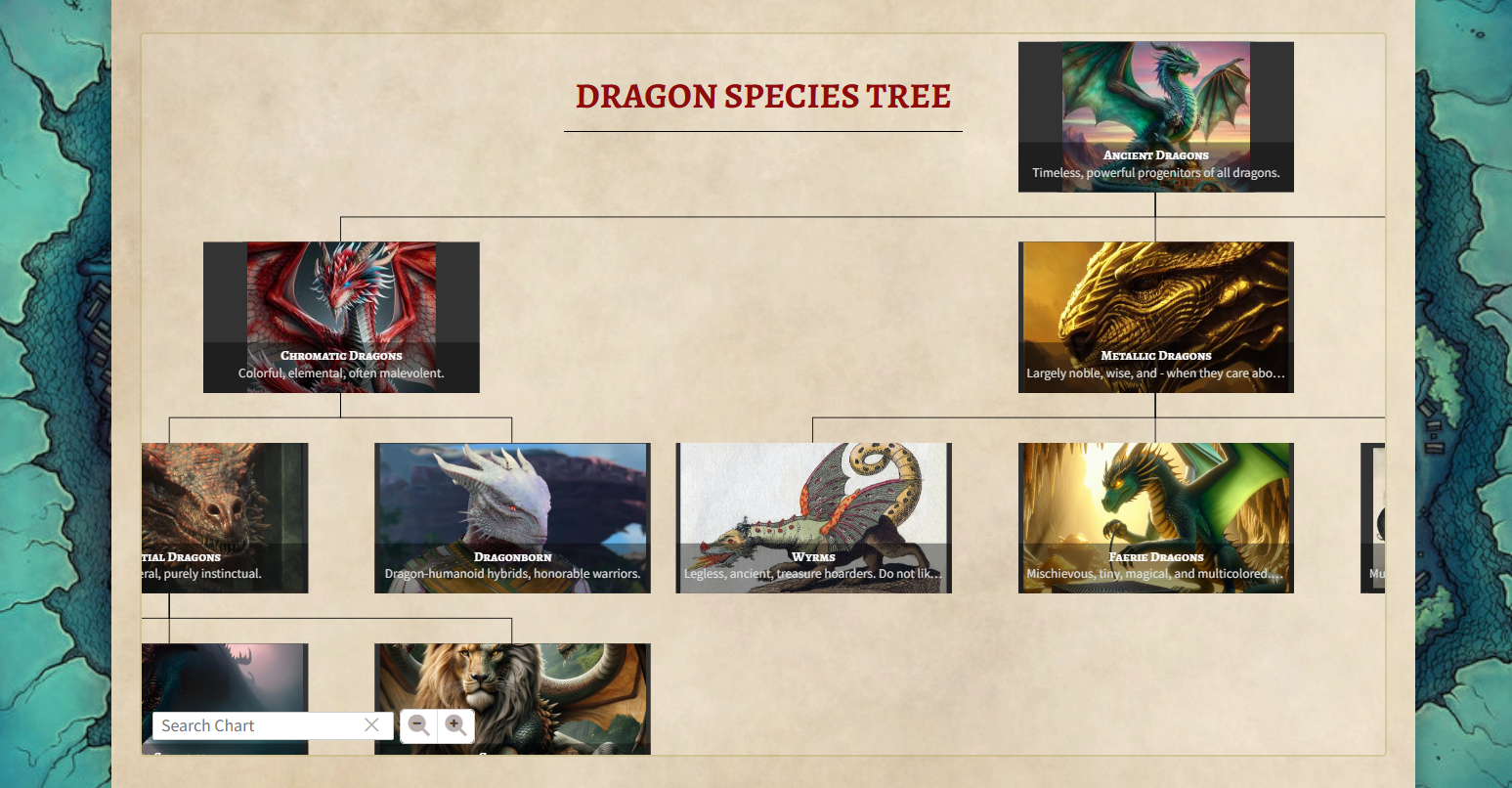
If you're building a fantasy world with multiple dragon species, this is worth thinking through carefully. Not every species needs to be rideable. You might have one apex predator lineage that no sane person approaches, and a separate, smaller species with pack instincts and a temperament closer to a large dog. The contrast itself becomes worldbuilding. This is where the Species template in World Anvil comes in so handy! You can not only create a single dragon species for your world, but a whole dragon family–complete with a content tree to show which types are friendly … and which ones will eat you. If you're not already familiar, World Anvil is a worldbuilding software designed to make creating a fantasy or scifi setting more fun and exciting for gamemasters and novelists.
2. Make Dragons Sapient (and Rethink Who's in Charge)
Here's the more philosophically interesting route, and the one that produces the richest dragon rider stories.
If dragons have human-level (or greater) intelligence, the domestication plan falls apart entirely. But so does the "rider as master" framing. A sapient dragon with fire breath, centuries of experience, and the raw physical power to level a castle is not going to be anyone's mount in any conventional sense.
What changes the equation is this: you're not the pilot. You're the pet.
Or more accurately, you're a useful partner, but one who has to earn that status.
Humans have one significant evolutionary advantage over dragons: technology. Opposable thumbs. Big, collaborative brains. The ability to design, manufacture, and use tools at scale. In the Dragonlance setting, the threat of enemy dragons makes human allies valuable. Specifically because humans can craft and wield dragonlances. In Anne McCaffrey's Dragonriders of Pern, the existential threat of Thread makes dragon-human cooperation essential to survival, and humans were genetically useful enough to dragons that they literally engineered the dragons themselves from smaller creatures.
The pattern is consistent: dragon riders work when there's a compelling external threat that makes the partnership mutually beneficial, and when humans bring something to the table that dragons genuinely need.
The Two Questions Every Dragon Rider Setting Must Answer
If you want dragon riders in your world, whether you're writing a novel, building a tabletop campaign setting, or designing a game, you need clear answers to two questions:
1. What compelling threat or shared goal makes dragon-human cooperation worthwhile?This is your narrative engine. It needs to be big enough that a creature who could otherwise ignore or eat you decides a partnership is worth the trouble.
2. What do humans specifically bring to the partnership?Technology? Spellcasting? Tactical knowledge? A sensory ability the dragon lacks? Some specific tool or craft? This is what makes your dragon riders feel earned rather than arbitrary.
Get both of those right, and your dragon rider lore will hold up to scrutiny and be more interesting for it.
For Dungeon Masters: Three Ways to Handle Dragon Rider Characters
If you're running a D&D campaign and a player wants a dragon mount, you have options. Here are three, ranging from easiest to most involved.
Option 1: The Spirit Dragon (Easiest, Most Balanced)
The Drakewarden Ranger subclass, introduced in Fizban's Treasury of Dragons, gives players a dragon spirit companion that scales with their level. A small, familiar-like creature at level 3 that grows into a flying, fire-breathing mount by level 15. Because it's a bound spirit rather than a living creature, you sidestep the thorny questions of how a wild apex predator came to let someone sit on its back.
The tradeoff: your player won't be riding anything until high levels, and the spirit companion is a genuine combat powerhouse. Make sure your encounters can challenge it, or it will trivialize your game.
Option 2: A Third-Party Dragon Companion Class (Middle Ground)
The Game Master's Book of Legendary Dragons includes a class specifically designed for players who want a real, living dragon companion: not a spirit. Players can ride their medium-sized dragon at level 3 (after paying for a saddle, so they don't fall off it) and fly on it by level 6. Because it's a living creature, it can die, and the class includes enough limitations to keep things reasonably balanced.
If your player wants the full dragon rider experience earlier in the campaign, this is a strong option. You'll want to establish in your worldbuilding why dragon riding is possible in your setting, or at least have a ready handwave.
Option 3: Use the Core 5e Mounted Combat Rules (Most Roleplay Potential)
Technically, dragon riding is already supported in the base rules. The 5e mounted combat rules state that any willing creature at least one size larger than you with appropriate anatomy can serve as a mount. The catch — and the gift — is that intelligent creatures act independently.
That phrase "act independently" is your lever as a DM. You decide what the dragon wants, what it's willing to do, and what would make a human worth partnering with at all. This becomes an extraordinary roleplay opportunity: your player has to actually convince a dragon to cooperate. What do they offer? Information? Gold? Crafted armor to protect the dragon in battle? A spell the dragon can't cast? That negotiation scene alone could be a campaign highlight.
For players going this route, the Mounted Combatant feat and the Cavalier Fighter subclass (for Born to the Saddle, Warding Maneuver, and Ferocious Charge) are strong mechanical complements. The Saddle of the Cavalier magic item is a useful alternative for non-fighters.
The Takeaway
Dragon riders are a fantasy staple precisely because the concept is so appealing: the freedom, the power, the relationship with a magnificent and dangerous creature. But the best dragon rider stories and settings don't just hand-wave the logistics. They ask hard questions about biology, power, and what humans actually bring to a partnership with a creature that could destroy them without breaking a sweat.
Don't worldbuild dragon riders as if dragons were just big horses. Don't ignore the obvious tensions the premise creates. Instead, lean into them. Build a compelling reason for cooperation. Give humans something to offer. And if you're a DM, use those tensions as fuel for roleplay, not obstacles to fun.
The worldbuilding work pays off. Dragon riders who make sense are far more satisfying than ones who exist simply because they look cool. Even if, admittedly, they do look very cool.

Learn worldbuilding methods & storytelling techniques from World Anvil experts to level-up your next novel, original D&D campaign setting or other creative projects.
.png)

Popular articles


Become a World
Anvil member
.webp)