The Second World Checklist: Essential Elements for Building a Traditional Fantasy Setting

When most people hear the word "worldbuilding," they picture somewhere entirely invented — a place of magic or far-future technology with its own rules, history, and geography. Brandon Sanderson's Cosmere. The Elder Scrolls' Tamriel. Dungeons & Dragons' Forgotten Realms. These are all examples of second world fantasy: settings built entirely from scratch, with no grounding in the real world.
Second worlds are the most common type of setting in traditional fantasy, and the most ambitious. You're not borrowing from history or tweaking the present — you're constructing reality itself. That freedom is exhilarating, but it can also be paralyzing.
This checklist cuts through the overwhelm by focusing on what actually matters at the start, and what you can safely leave until later.
Layer One: The Foundation
Everything in a second world flows from its fundamental laws. Before you can build civilizations, conflicts, or characters, you need to establish the basic rules of your reality.
Magic and technology. Does magic exist in your world? If so, how does it work — and how common is it? A world where anyone can cast spells feels radically different from one where magic is rare, dangerous, or jealously controlled. The same questions apply to advanced technology if your setting leans toward fantasy sci-fi.
Physical laws. Don't assume your world works like Earth. Do seasons function differently — perhaps unpredictably long, like in Game of Thrones? Are the celestial mechanics unusual? Does gravity behave as expected? These details don't need to be exhaustive, but knowing where you're departing from reality helps you stay consistent.
Geography and environment. Get a basic sense of the lay of the land. You don't need to map every continent at this stage — just enough to ground your story's starting location. A dappled ancient forest, a sun-baked desert empire, a foggy archipelago of city-states. Begin where your story begins, and expand outward as you need to.
Species. Who and what inhabits this world? This includes both sapient peoples — your elves, your alien species, your constructed races — and the animals and creatures that populate the wilds. Consider how they interact with the physical environment you've built. A species that evolved in a desert will have very different culture, architecture, and mythology than one from an arctic tundra.

Foundation Checklist
- Magic or advanced tech: does it exist, how does it work, how common is it?
- Physical laws: gravity, seasons, celestial mechanics
- Basic geography and climate
- Sapient species and notable creatures
Layer Two: Power Structures and Organizations
Once your foundations are in place, it's time to add the drama — and drama means people.
Sketch out the major civilizations, factions, and power structures of your world. The details can come later, but you need enough to understand who wants what and why they're in conflict. Love, money, and power are the three forces that motivate killers in murder mysteries; scaled up, they generate the conflicts that drive entire worlds.
Ask yourself: what do your societies value enough to fight for? What resources — staples or luxuries — push them toward diplomacy or conquest? Who holds power, and how do ordinary people feel about that arrangement?
It's also worth thinking early about where your protagonists fit in. Will they be knights or outlaws? Insiders working within the system or outsiders trying to upend it? This may shift from story to story, but having a sense of the options available to your characters shapes the kind of world you need to build.
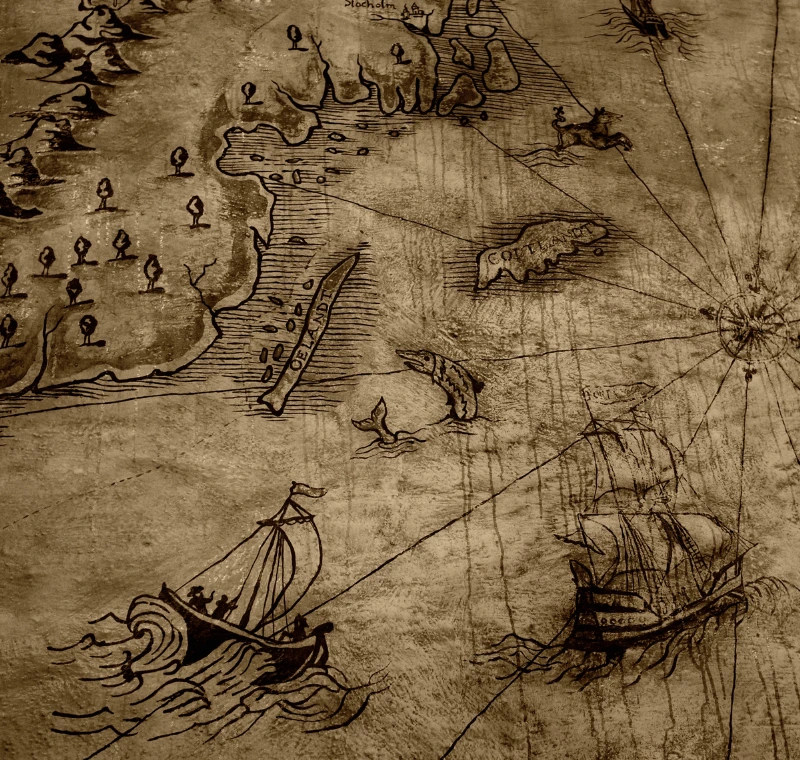
Finally — the map question. A rough sketch can be genuinely useful as a private reference, even if it's ugly and imprecise. Just resist the urge to make it beautiful before you've written a word. It's a tool, not a deliverable. Of course, World Anvil has interactive maps that allow you to embed your maps with vital information. So it can be pretty AND useful.
Organizations Checklist
- The major civilizations or factions and what drives them
- The core conflict or tension at the heart of your world
- How your protagonist fits into — or against — the existing order
- A rough map (functional, not final)
What You Can Skip (For Now)
Here's the permission many worldbuilders need: you do not have to build everything before you start writing.
Detailed histories of every kingdom, complete genealogies, a fully developed grammar for your constructed language, a comprehensive atlas of the entire world — none of this needs to exist before your story does. By all means, make notes on things that excite you. But treat those notes as raw material, not prerequisites.
The most effective approach is to establish a solid framework of logic for your world first, then fill in the details as your story demands them. Details grounded in the big truths you've already established will feel coherent and purposeful, rather than like trivia attached to the outside of your story. In World Anvil, you can document these events in a Timeline, which lets you scan through your world's major historical turning points quickly.
Leave These Until Later
- Detailed histories of every kingdom and civilization
- Complete family genealogies
- Full constructed language grammars
- Comprehensive world geography beyond your story's immediate scope
Start Small, Think Big
A second world is a significant undertaking, but it doesn't have to be finished before it's useful. Start with the essentials — the foundational laws, the major factions, the central conflict — and let the world grow outward from the story you're actually telling.
The best second worlds aren't the ones built most comprehensively. They're the ones built most intentionally, where every detail earns its place by making the story richer.
Build what you need. Then go write it.

Learn worldbuilding methods & storytelling techniques from World Anvil experts to level-up your next novel, original D&D campaign setting or other creative projects.
.png)
.webp)
Popular articles

Become a World
Anvil member
.webp)