The omniscient point of view is one of the oldest narrative styles in existence, stretching from ancient epics to the satirical fantasy of Terry Pratchett. It is also one of the most difficult styles of writing to execute well. It's a hard sell in modern fiction, which leans towards more intimate perspectives like first person and tight third person POV.
In this guide, we'll break down what omniscient POV actually is, when to use it, and how to write it with the skill it demands.
What Is Omniscient Point of View?
At its core, omniscient point of view means your narrator knows everything. Not just what one character sees, hears, or thinks, but the inner lives of every character, the history behind every event, and the significance of every detail. The word itself comes from the Latin omnis (all) and sciens (knowing). Your narrator is, in essence, a god.
That said, there are two distinct types of omniscient narration:
Objective Omniscient narrators report what happens across the world of the story including thoughts, feelings, and events, but tend to do so without strong editorial comment. The narrator is a witness, not a personality.
Editorial Omniscient narrators have a voice, a point of view, opinions, and sometimes a wicked sense of humor. They don't just report. They interpret, editorialize, and occasionally address the reader directly. Think of the dry, knowing asides in a Discworld novel.
It's also worth distinguishing omniscient POV from the close third person, which is where most contemporary fiction lives. In close third, the narrator may follow multiple characters, but it does so one at a time, with the narrative filtered through the lens of each character. The narrator's knowledge is limited to what that character knows or senses. Omniscient POV is not tethered to any single consciousness. The narrator can move from one mind to another, pull back to show the sweep of history, or zoom in on a detail no character is even aware of.
This distinction matters because the most common POV error beginning writers make — "head-hopping" — is often the result of accidentally drifting into omniscient narration.
The Pros of Omniscient POV
1. Epic Scope
Some stories are simply too big for one pair of eyes. If your narrative spans continents, centuries, and dozens of characters with intersecting fates, omniscient POV gives you the structural freedom to move between all of them. Omniscient narrators can skip forward, scan backward, and observe simultaneous events in different locations. For stories with complex timelines, multiple plotlines, or large ensemble casts, this flexibility can be essential.
2. Rich Worldbuilding Delivery
An omniscient narrator can give readers context that no single character could provide. It can reveal the history of a political conflict, the significance of a cultural ritual, the meaning behind a piece of architecture. This makes omniscient POV particularly powerful in science fiction and fantasy, where the world itself is often as important as the characters inhabiting it.
3. Dramatic Irony
The omniscient narrator can employ dramatic irony by telling readers things that characters don't know. Readers can watch a character make a decision knowing it will go terribly wrong. They can see the full picture of a misunderstanding while two characters talk past each other. This kind of tension keeps readers engaged, as they wait to see how the conflict they can see coming will play out.
4. The Narrator as a Character
In editorial omniscient narration, the narrator's voice can become one of the most enjoyable elements of the entire book. A narrator with wit and personality turns the act of reading into a relationship. You're not just following characters. You're in the company of someone who has strong feelings about what they're telling you.
The Cons of Omniscient POV
1. Emotional Distance
The biggest trade-off is intimacy. When readers are inside one character's head, the emotional bond is visceral. Omniscient narration operates at a greater remove. Readers know about characters rather than experiencing them directly. Done poorly, this can leave readers feeling like observers of events they don't care about.
2. Head-Hopping
Moving freely between characters' minds is omniscient narration's biggest risk. Without clear signaling and scene transitions, readers can become disoriented. Mid-paragraph shifts from one character's inner experience to another's feel jarring and confusing.
3. Breaking Tension
A narrator who knows everything can accidentally share too much. If the narrative voice signals that everything will be fine, or that a character's fears are unfounded, it drains suspense from scenes that should crackle with tension. Managing the difference between reader knowledge, character knowledge, and narrator knowledge requires constant discipline.
4. It Can Feel Old-Fashioned
Contemporary readers, trained on decades of close third-person and first-person fiction, sometimes find omniscient narration distancing in a way that feels dated rather than classical. Without a compelling, distinctive narrative voice to justify the distance, omniscient POV can feel like the narrator is simply telling rather than showing: the most persistent critique in modern writing workshops.
Examples from Science Fiction and Fantasy
The genre shelves are full of omniscient narration done brilliantly. Here are four examples worth studying:
The Lord of the Rings, J.R.R. Tolkien
Tolkien's narrator feels less like a storyteller and more like a historian of Middle-earth. The narrative moves between characters, but is always filtered through a sense that these events are being recorded from a vast distance of time. The famous prologue, "Concerning Hobbits," sets the omniscient tone immediately: this is a narrator who has access to lore and legend well beyond what any single character could know.
Dune, Frank Herbert
Herbert's omniscient narration is unusually introspective. Readers receive not just events but the private thoughts, political calculations, and prophetic visions of multiple characters. The epigraphs from in-world texts (the collected sayings of Muad'Dib, the journals of the Princess Irulan) further extend the narrator's reach across time, suggesting a future that already knows how the story ends.
Discworld, Terry Pratchett
Pratchett's editorial omniscient narration is perhaps the most celebrated in modern fantasy. His narrator doesn't just observe. He editorializes, philosophizes, makes footnotes, and occasionally stops to point out the absurdity of what he's describing. The narrative voice is so distinct, funny, and wise that it's the main reason to read the books. The Discworld series demonstrates that the narrator can be the most compelling presence in a story.
The Hitchhiker's Guide to the Galaxy, Douglas Adams
Adams deploys omniscient narration as cosmic comedy. His narrator knows not just what's happening on Earth, but what's happening across the galaxy, and takes full advantage of that vantage point to expose the fundamental ridiculousness of existence.
When Omniscient POV Is the Right Choice
Consider omniscient narration when:
Your story has a large cast or multiple storylines. If your novel follows five characters whose fates are intertwined but who never meet until the final act, omniscient POV lets you give each of them genuine weight and interiority without committing to a single protagonist's perspective.
Your world needs to be a presence in the story. In epic fantasy and science fiction particularly, the world itself — its history, its factions, its physical laws — is often as important as the characters. An omniscient narrator can deliver this context organically, without resorting to clumsy exposition devices.
You have a strong, distinct narrative voice. If you write with personality, and your prose has wit, elegance, or a distinctive attitude, omniscient narration gives that voice room to breathe. The narrator becomes a presence readers enjoy spending time with.
Your story spans vast time, geography, or culture. Political epics, multigenerational sagas, and world-spanning adventures often require a narrative mode that can move freely across these dimensions.
You're consciously working in the tradition of classic epic. If your touchstones are Tolkien, Herbert, or Le Guin, omniscient narration is part of the genre conventions you're working within.
When to Think Twice About Omniscient POV
Omniscient narration may not be the right tool when:
Your story is a deeply personal journey. First person or close third creates a level of intimacy and interiority that omniscient narration can't match. If your novel is fundamentally about being inside one person's experience of grief, addiction, or psychological unraveling, omniscient distance will work against you.
Suspense depends on the reader being in the dark. If your thriller works because the reader and the protagonist discover the truth together, an all-knowing narrator is an awkward fit.
You're still developing POV control. Beginning writers often head-hop accidentally. If you're still building your POV muscles, it's worth mastering close third before attempting the more complex discipline of omniscient narration.
Your genre conventions favor intimacy. Contemporary YA, psychological thrillers, romance, and literary fiction have largely settled into close third and first person as defaults. Omniscient narration can work against reader expectations in these genres unless you execute it exceptionally well.
Building the World Your Narrator Can Actually Know
Here is a truth about omniscient point of view that doesn't get discussed enough: the narrator can only be as authoritative as your worldbuilding allows them to be.
An omniscient narrator who speaks with confidence about the political history of a fictional empire, the ecological pressures shaping a culture's beliefs, or the ancient grievance behind a war commands trust. Readers feel the depth behind the prose. But if you, as the author, haven't actually worked that world out? The narration will feel hollow and vague.
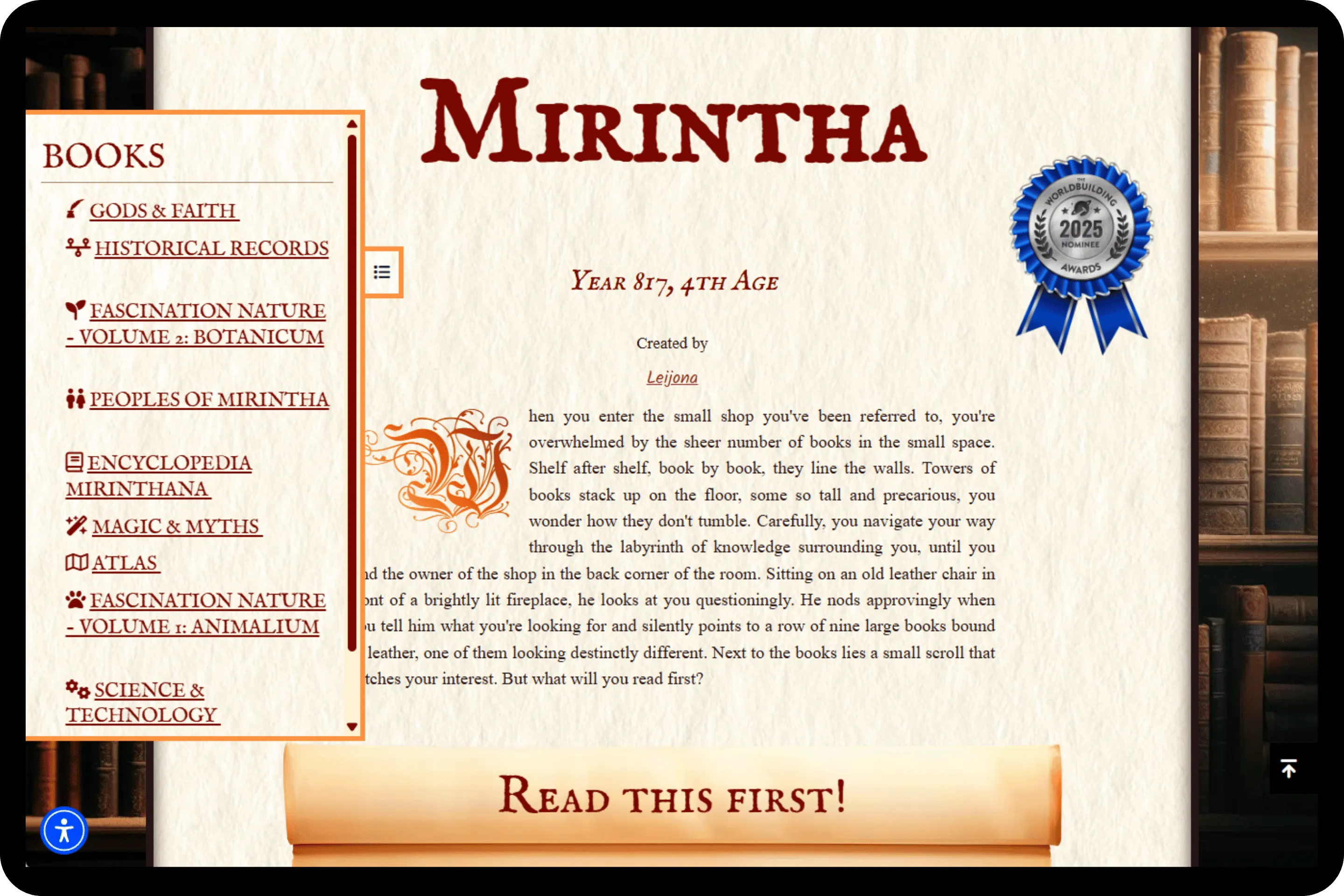
This is why writers working in omniscient POV need robust worldbuilding tools. World Anvil, an award-winning worldbuilding platform recognized by Writer's Digest and recommended by Pro Writing Aid, is built precisely for this kind of work. It gives writers a structured space to develop and organize the lore, timelines, maps, faction histories, relationship webs, and cultural details that underpin a fully realized fictional world.
For omniscient writers in particular, World Anvil functions as the repository of everything the narrator knows, even if only a fraction of it ever makes it onto the page. This is the iceberg beneath the surface that makes the visible tip feel solid and real. You can explore World Anvil at worldanvil.com.
Tips for Writing in Omniscient POV
Give the Narrator an Attitude
The most memorable omniscient narrators are not just reporters. They seem to care about the story. They find it funny, heartbreaking, important, or absurd. Tolkien's narrator is reverent. Pratchett's is sardonic. Adams' is bemused. Figure out how your narrator relates to the world they're describing, and let that attitude color every sentence.
Not a License to Info-Dump
The narrator knowing everything does not mean the narrator should tell everything. Selectivity is essential. Ask yourself: what does the reader need to know right now, and what is most effectively withheld? An omniscient narrator who explains everything up front sacrifices mystery, tension, and the reader's pleasure of discovery.
Switch POVs Deliberately
Use scene breaks, chapter transitions, or at minimum a clear paragraph break when shifting between characters' perspectives. Mid-scene head-hopping that isn't signaled tends to feel chaotic. When you do shift, make it feel purposeful, like a camera choosing its angle, rather than incidental.
Use Distance Strategically
Omniscient narration allows you to zoom in and pull back. Pull back for scope, context, and history. Zoom in close to a single character's experience for emotional intensity and intimacy. Varying this narrative distance is one of the most powerful techniques available to omniscient writers. The mistake is staying permanently at a single remove.
Study the Masters
There is no substitute for reading great omniscient narration closely and analytically. Pick up Discworld, Dune, The Left Hand of Darkness, or Jonathan Strange & Mr Norrell and ask: how does this narrator move between characters? When do they pull back and when do they zoom in? What is the register of the voice? How is information withheld and revealed? Reading great omniscient fiction as a writer will teach you more than any craft manual.
Omniscient point of view asks a lot of a writer. It demands a strong, consistent voice. It demands disciplined control over the movement between minds and the timing of revelations. It demands a world deep enough to justify a narrator who claims to know all of it.
But when a narrator speaks with genuine authority, wit, or elegiac grace about a world that feels ancient, real, and vast, there is nothing quite like it. The best omniscient narrators don't just narrate the story. They make you feel like you have been granted access to something you were never supposed to see.
The god narrator, at their best, is not a dispassionate observer. They are a passionate one. And that is what makes readers turn the page.

Learn worldbuilding methods & storytelling techniques from World Anvil experts to level-up your next novel, original D&D campaign setting or other creative projects.
.png)

Popular articles

Become a World
Anvil member
.webp)