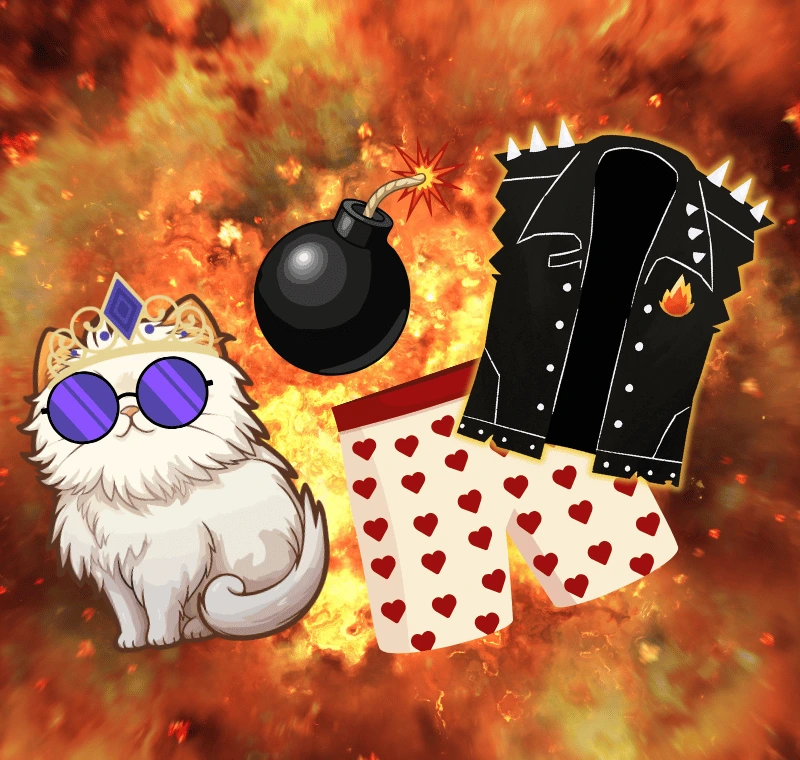
Apocalypses, Blow-ups & Cataclysms: The ABCs of Worldbuilding History

Your ancient empire should be a baffling puzzle, not a Wikipedia article. If your world's ancient past isn't mysterious and elusive — a graveyard of tantalizing questions, unexplained phenomena, and priceless relics — then what purpose does it serve? Why should your players or readers care?
Here's how to make your world history a fascinating mystery, including five ways to destroy your ancients like a wrathful god, and the tools to make sure your audience is dying to know what really happened.
Why Destroy Your Ancient World?
Abrupt, dramatic ends to civilizations are an incredible way to create mystery and drama in your world's present day. Think priceless treasures, world-shattering truths, and global threats lurking just beneath the surface like a sleeping elder god.
A civilization that fades gradually leaves little behind worth discovering. Its relics get sold off, melted down, repurposed. But a sudden, catastrophic end? Everything is left exactly where it fell, waiting.
Here's what fallen ancient empires can offer your story.

What Ancient Empires Leave Behind
A Convenient Source for Dungeons
Fallen civilizations are where your mysterious ruins come from. Tombs. Ruined temples. Weird laboratories. Gryphon aviaries. The details you choose give tiny glimpses into an ancient society. What they valued, how they decorated, and who they worshipped. Letting your players or readers explore these strange environments is half the fun.
Irreplaceable Treasures
The Dwemer from Elder Scrolls are one of the best examples of a lost empire done right. Nobody knows what happened to them. These technologically advanced "dwarves" left behind entire mechanized cities when they vanished without explanation. Their relics are precious precisely because the knowledge to recreate them is gone forever. A dramatic end means everything was left in situ and ripe for discovery.
Lost Truths That Shatter the Status Quo
Ancient empires can hide explosive secrets. In Dragon Age, the rise and fall of the elven kingdom of Arlathan had implications for all of Thedas. When the true story of the world's origins is revealed, it threatens to devastate powerful institutions and fundamentally change how an oppressed people see themselves.
These revelations can herald a climax in your campaign or story. What if the gods were really just mortals who ascended? What if magic is made from nanites? The question of whether your heroes reveal what they've learned or participate in the conspiracy to hide it is the stuff of truly memorable adventures.
A Looming Threat That Sets the Mood
The Protheans from Mass Effect disappeared millennia before the game begins. Players eventually learn that the advanced "Prothean tech" underpinning galactic civilization was actually left behind by the Reapers, a galaxy-spanning threat that annihilated the Protheans entirely. The Reapers are gone... for now. But their material presence lingers on, a masterpiece of tonal foreshadowing. You can achieve the same effect with giant statues, a magical heritage, or a network of ancient teleportation gates. Any of which could awaken at any moment.
Time Capsules of Wonder
Not everything left behind needs to be dangerous. The Netheril from Forgotten Realms were a magocracy so powerful they built floating cities. When their goddess of magic died, their civilization came crashing down... literally. Their ruins are time capsules from an era when the impossible was everyday. Ancient empires can be a source of awe as much as dread.
World Anvil's Timelines feature is a really useful tool for building your setting's ancient history. You can find out more about them in this video:
5 Ways to Blow Up Your Empire
1. The Bronze Age Collapse
Pull from real history. A perfect storm of natural disasters like earthquakes, volcanoes, or drought combines with military conflict to stress a fragile, interdependent society past its breaking point. No single cause destroys it; it's the cascade failure as everything unravels at once.
2. The Mysterious Disappearance
The entire civilization vanishes after a single, unexplained event, leaving everything exactly as it was the moment everyone blinked out of existence. Were they raptured? Was it a magical nuke? A lightning-fast technoplague? Nobody knows. And nobody knows if it could happen again.
3. The World Shattered
Whether from an asteroid impact, magic or science gone catastrophically wrong, or something cosmic using your planet as an incubator, the world itself is broken. In these stories, the ancients represent a more innocent era, a world that was whole and unbroken. In Pathfinder's Golarion, the ancient Azlanti and Thassilon empires were brought down by a swarm of continent-sinking meteors that blotted out the sun for a thousand years.
4. Divine Smite
Sometimes a god — or a pantheon, or an indifferent cosmic force — simply decides to wipe the slate clean and start over. The civilization doesn't fall so much as get erased.
5. Ascension Beyond Mortality
Instead of destruction, transformation. Like the Alterans from Stargate, your ancients transcended mortal existence entirely and left all that pesky physical crap behind. This approach means they can still influence the world in mysterious, indirect, deeply unsettling ways. And whatever technology or magic they left behind will seem like sorcery to those who come after.
Making It Work in Your World
A compelling ancient empire isn't just backstory. It's active architecture for your plot. Every ruin, every relic, every half-translated inscription is an opportunity to pull your audience deeper. The key is restraint: reveal just enough to make the mystery irresistible, and leave the rest tantalizing and dark.
The past shouldn't just quietly die. Kill it explosively, and let the wreckage echo through your story's present.
Now grab your hammer, and go worldbuild!

Learn worldbuilding methods & storytelling techniques from World Anvil experts to level-up your next novel, original D&D campaign setting or other creative projects.
.png)

Popular articles


Become a World
Anvil member
.webp)