Bronze Age Worldbuilding: How to Create a Mythic Fantasy Ancient Greek Setting
If you love epic stories of gods, monsters, and kings — of lands in turmoil crying out for larger-than-life heroes — then it's time to dig into the joys of mythic fantasy worldbuilding.
This guide will show you how to build a mythic fantasy world that feels like The Odyssey, like Xena: Warrior Princess, like Hercules but with your own geography, gods, monsters, and lore. This is mythic fantasy worldbuilding without just ripping off Ancient Greece.
When Is Mythic Fantasy Actually Set?
Let's start with some real history. Mythic Fantasy, aka the world of heroes like Odysseus and Achilles, draws on the myths of the ancient world, and that means it's set before the era of Classical Greece (the age of the 300 Spartans and the Greco-Persian Wars).
The stories of Odysseus and Agamemnon actually take place roughly 700 years earlier. Think of it like the relationship between our modern day and the 14th century. This mythic period is essentially the ancient world's version of medieval fantasy.
That places us in the Bronze Age: an era of palatial kings, Mediterranean trade, and wandering gods and monsters.
You don't need to be historically precise. No one will fault your NPCs for slightly-off earrings or hairstyles. But the Bronze Age is a fantastic foundation for a mythic fantasy setting, and the rest of this article will walk you through exactly what you need to build one.
How Big Should Your Bronze Age World Be?
Your planet can be as huge as you like, but how big is your active worldbuilding area: the region where your stories will actually unfold? Setting boundaries for this first active area is key to avoiding overwhelm.
In The Odyssey, Odysseus spends ten years sailing past strange civilizations, monsters, and distant kingdoms. It can feel like the world is enormous. But really, his journey unfolds across the Mediterranean. That's the scale to aim for: something roughly the size of the Mediterranean Basin.
A Pro Tip for Your Map
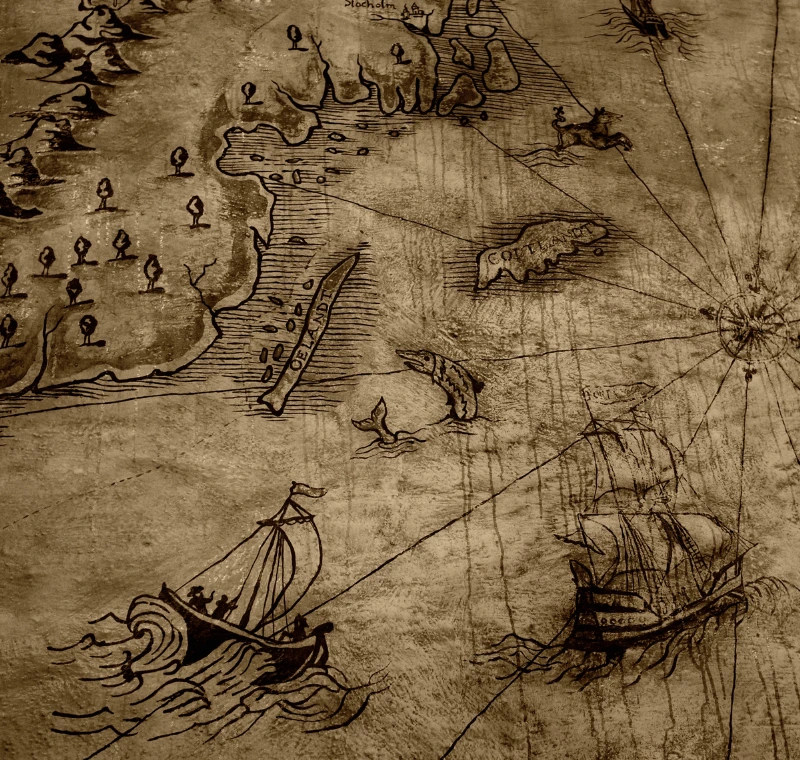
If this is your first world, make life easier by sketching something that "kinda looks" like the Mediterranean, the same way George R.R. Martin used the shape of the UK as a basis for Westeros in Game of Thrones. You can get creative with names and cultures, but a familiar silhouette gives you a strong starting point.
More seasoned worldbuilders should get creative with their landmasses. Add plenty of islands and archipelagos alongside your mainlands, along with mountains and a few volcanoes — the real Mediterranean is a geologically active region even today (it's no accident that Poseidon is the god of both the sea and earthquakes).
Whatever your coastline looks like, put a large sea at the centre of it. That water is what connected the Bronze Age world. It powered the trade and travel that feels so essential to mythic fantasy. Mountains were hard to cross, but ships moved people and cargo efficiently across the known world. And if you want sea-faring combat or your own spin on piracy, this setting is built for it.
Add Natural Wonders and Geographic Landmarks
You don't need a map at all, and it certainly doesn't need to be pretty. But a map is an enormously useful worldbuilding tool. Once you've got a rough shape down, and before you even think about politics, add some natural wonders and geographical landmarks. They're essential to mythic fantasy:
- In Ancient Greece, Mount Olympus is the home of the gods.
- Springs and rivers often carry healing or prophetic powers, or hide monsters and nymphs.
- Certain caves and sacred trees, and even whole islands like Delos, are considered holy.
- Mount Etna in Sicily was known as the forge of Hephaestus and the prison of the giant Typhon. And if you're ever looking at a mythic monster and wondering "who's your daddy," the answer is usually Typhon.
Once you've built your map (in a tool like Inkarnate, for instance), bring it into World Anvil and start adding pins for your natural wonders. You can keep notes on what you intended for each one, and set the pins to private so only you can see them, then reveal them to your readers or players later, when your heroes discover them.
Palatial Kingdoms: Wars, Feuds, and Politics
With the size and shape of your world settled, it's time to build the geopolitical landscape. Who are the major players, and what do they control?
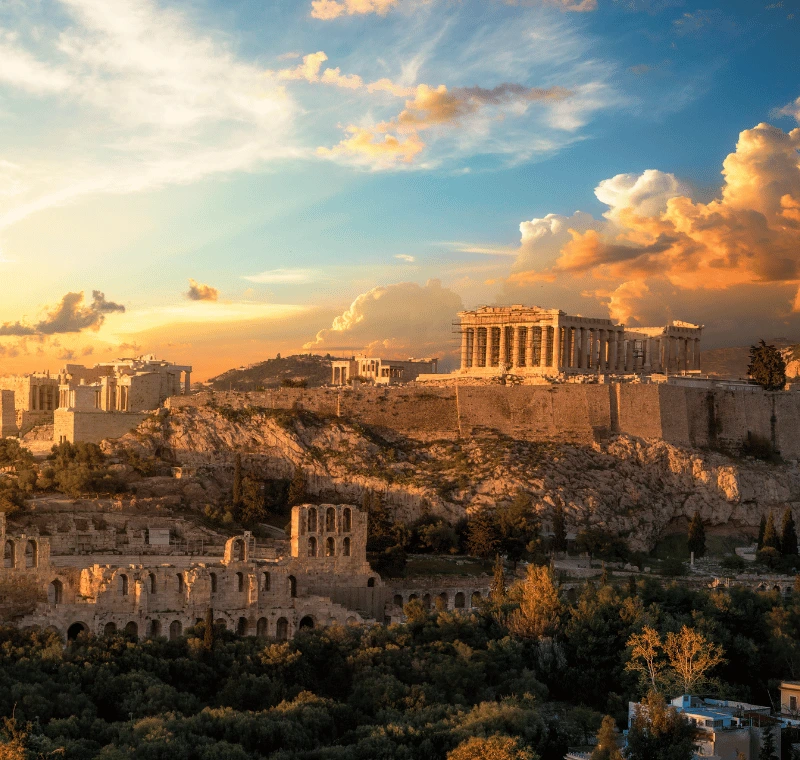
Remember: this is Bronze Age Greece, not Classical Greece. You're not dealing with city-states like democratic Athens versus militaristic Sparta. Instead, Palatial Kingdoms were ruled from a palace that taxed and administered the surrounding lands. They were part royal residence, part government headquarters.
Odysseus was the Wanax (king) of the Palatial Kingdom of Ithaca. King Minos ruled the Palatial Kingdom of Knossos, in Crete. Looking at a map of the real Mycenaean palace states and the wilderness between them gives you a great sense of scale for your own kingdoms, and that wilderness is prime territory for adventure.
This structure works beautifully for both writers and GMs. In rags-to-riches narratives, heroes start in a village and work their way toward the palace as they gain renown. Or they can head straight into the wilderness to explore isolated, dangerous regions.
As a general guide, each Palatial Kingdom might include:
- One palace, ruled by a king
- Roughly 5–10 larger villages, each with an administrative manor acting as a local mini-palace
- Dozens of smaller farming villages
- Hundreds of isolated farmsteads and shepherds' holdings
In World Anvil, you can mark each Palatial Kingdom with a transparent polygon on a marker group layer, letting you toggle the geopolitical layer on or off to see just the geography underneath. You don't need to design every village up front. Start with a handful of key locations and build outward as your story demands.
Larger islands, like Crete, might support their own full Palatial Kingdom (the Palace of Knossos, for example). Smaller islands, like Rhodes, would have had modest settlements and probably a self-styled local ruler rather than a grand palace.
Building Out the Geopolitical World
Once your Palatial Kingdoms are in place, you've essentially created a world for your heroes. Add settlements to your islands, along with trade routes connecting everything together. This is fertile ground for your first adventures. Heroes can battle monsters in the wilderness, get swept up in political rivalries, escort princesses and trade caravans, serve oracles, fight pirates and bandits, and explore caves, forests, and natural wonders.
Set up alliances and feuds between your kingdoms as a foundation for these stories: land grabs, questions of honour, inheritance disputes, revenge, or something more mythic entirely. World Anvil's diplomacy webs are a great tool for mapping these relationships, giving you a strong base for alliances and feuds and a wealth of trickle-down plots to draw from later.
Beyond the Known World
Your heroes will likely start out familiar with the names and reputations of your Palatial Kingdoms. But once they've explored that core region for a while, it's time to plunge them into the mythic unknown.
1. The Local Region: The Familiar World This interconnected web of Palatial Kingdoms is the heart of your setting.
2. The Faraway World: the "Known-Unknown" Beyond it lies the faraway world: places an average farmer would only hear about in stories, visited by merchants, diplomats, and heroes. This is where nature gets exotic and cultures grow more distinct, full of wonders waiting to be explored. In real Bronze Age history, this region would include Anatolia, the Middle East, and Egypt. All of which were far more powerful than the small Palatial Kingdoms, but distant enough to feel legendary.
Mark this region on your map, but keep it hidden until your heroes actually venture there as envoys guarding gifts, sailors blown off course, or fugitives fleeing an angry king's wrath.
3. The Mythic Unknown Beyond even the known-unknown lies the world of myth and legend. These are the places beyond the map, where the rules of reality grow gradually more unhinged. Think the entrance to the underworld, the Amazons, Atlantis, the land of the lotus-eaters, or lands where men have no heads. Just make sure your heroes find their way home eventually.
The Gods: How They Do (and Don't) Get Involved
The gods are fundamental to the myth half of mythic fantasy, but starting your worldbuilding here can spiral into thousands of years of unnecessary baggage. Here are the specific pitfalls to watch for when building a Bronze-Age-inspired pantheon.
Choosing Your Pantheon's Names
Aim for a pantheon of roughly 8 to 12 deities. That's enough for real conflict and drama, without overwhelming yourself or your audience. Then comes the tricky question: what do you call them?
- Use the original Greek names (Zeus, Hera, Aphrodite) for instant recognition and an authentic feel, but be aware these myths have been retold many times with shifting details. Ancient Greece's Medusa, for instance, is born a monster, while by Roman times she's a tragically cursed woman. Give your audience a version they don't expect, and they may react unpredictably.
- Rename and remix the deities, the way Theros (the Magic: The Gathering/D&D setting) does, blending primal gods with the Fates and an Olympian-style pantheon. This approach can feel muddled if not handled carefully.
- Create new deities with different portfolios is a favourite approach for more experienced worldbuilders. Try a god of Crafting and Civilization, a terrifying god of Hunting and Death, or split an existing portfolio in two: a God of Wrath and Storms alongside a Goddess of Serenity and Safe Harbour. This is the best way to move meaningfully away from the real world and toward something that's truly yours.
However you name them, know that your pantheon will do a lot of heavy lifting in your setting.
Gods Have Real Agency
Bronze Age gods are genuinely temperamental, easily offended, prone to favouritism, and quick to punish. If your heroes desecrate a temple, offend an oracle, or eat the wrong cattle, expect horrible vengeance. That's exactly what happens to Odysseus: he blinds Poseidon's Cyclops son, and the sea god spends the rest of the story wrecking his ships with storms.
But Odysseus also has help. Athena disguises him, appears in his dreams, and quietly stacks the odds in his favour. Notice that neither god interacts with him directly. They work through storms, catastrophes, monsters, visions, and magical gifts. Even a friendly deity doesn't solve the hero's problems outright; Odysseus still has to earn his success. That's good storytelling.
Between story arcs or campaign chapters, shift these divine alliances and feuds to show the passage of time and how your heroes have changed the world around them.
Once your pantheon is set, build an overview article with a family tree to keep it organized, plus a character article for each god. Give them a clear symbol so your readers or players can keep them straight.
Where Monsters Come From
Gods are the backstage architects of mythic fantasy, but you need direct conflict to drive an adventure, and nothing beats a good monster for that. In Ancient Greek mythology, monsters generally come from one of three sources:
- Divine heritage: the Cyclops, for instance, is Poseidon's child (he's notably the only Olympian with a habit of fathering monster babies with various nymphs).
- Divine punishment: gods transforming people into monsters or cursing the unborn, as with the origin of the Minotaur.
- Monsters begetting monsters: Typhon and Echidna are the parents of Cerberus, the Hydra, the Chimera, and more. Since Typhon and Echidna themselves descend from primal chaos deities, this is really just divine parentage with extra steps.
One way or another, monsters trace back to the gods, and the same is true of magic.
Magic Systems in Mythic Fantasy
In Bronze Age worldbuilding, magic users get their powers either as the mouthpiece of a god (like oracles) or through divine bloodlines:
- Circe, the witch, is the daughter of Helios.
- Medea is Helios's granddaughter.
- The Oracle of Delphi is a high priestess of Apollo.
- Orpheus, with his magical music, is the son of the muse Kalliope.
This actually simplifies your worldbuilding. You don't need to engineer a complex arcane magic system when divine bloodlines already explain where power comes from.
Heroes and the Meaning of Heroism
Most mythic fantasy heroes carry a divine bloodline of their own. Hercules is Zeus's son; Odysseus descends from Hermes, which explains his trickster streak. Your hero's heritage might grant special strength, cunning, or magic. And you can choose to reveal it upfront or let it be a mystery to uncover, as in Disney's Hercules or Percy Jackson.
Tradition also calls for a fatal flaw: Hercules had a terrible temper, Odysseus was prideful. But this is where ancient and modern storytelling diverge.
Ancient vs. Modern Heroes
Audience expectations have shifted enormously since these myths were first told. Ancient heroes chased glory through "great acts" that would strike modern readers as shockingly brutal. Just look at the original ending of The Odyssey. Modern storytelling also tends to let characters overcome their fatal flaws through effort and growth, which is exactly where a satisfying character arc can live.
Give your heroes plenty of opportunities to grow, usually through tests and trials. They might be redeeming themselves after mistakes (like Hercules and his Twelve Labors), completing missions for a Palatial King (like Perseus and Medusa), or answering the call of a patron deity. Combine that with diplomacy, exploration, and monster-slaying, and you've got the full toolkit of mythic fantasy adventure.
Ready to Get Mythic?
There's a lot more ground to cover on monsters, heroes, and gods, including how to keep your pantheon from taking over your entire story. But this should give you a solid foundation for building your own Bronze Age mythic fantasy world.
Now grab your hammer, and go worldbuild!

Learn worldbuilding methods & storytelling techniques from World Anvil experts to level-up your next novel, original D&D campaign setting or other creative projects.
.png)
Popular articles
Become a World
Anvil member
.webp)