How Dungeon Crawler Carl Makes Exposition Unskippable

"Show, don't tell," says every writing class and craft book ever written. For game masters, the advice is similar: don't infodump, or you'll lose your players.
Dungeon Crawler Carl (a hit litRPG series) completely ignores that rule. It throws stat blocks, loot descriptions, system messages, and game mechanics at the reader constantly. By the usual logic, that should be a grind. Instead, it's sold over 10 million copies and been picked up for a TV show.
So what's going on? Is the rule wrong, or is author Matt Dinniman simply a mad genius? But more importantly, can the rest of us steal that genius? How does he explain a magic system, an alien reality show, and a massive cast of NPCs, items, and lore without his audience's eyes glazing over?

It turns out the trick isn't avoiding exposition. It's making exposition do story work. That breaks down into three techniques: Perspective, Personality, and Purpose. Together, they pull the audience into the narrative, deliver information in a way that's fun to receive, and only when it's actually needed. The goal is exposition that disappears into the story instead of stopping it cold.
"Show, don't tell" is genuinely useful advice, but the real problem with exposition was never the information itself. It's how that information is delivered. At its worst, exposition feels detached from character, conflict, and consequence. Dungeon Crawler Carl doesn't make exposition invisible; it showcases it in a way that actually increases immersion.
Here's how.
Perspective: Diegetic Exposition Puts You Inside the Story
The first technique is easy to spot. The book never explains the dungeon's rules through some omniscient narrator. Instead, characters and dialogue boxes explain the rules directly to Carl, usually with a snarky attitude.
The technical term for this is diegetic: things the characters experience directly, within the world of the story. A common film equivalent is diegetic music. This is when the soundtrack isn't just for the audience, but the character actually hears it too, through a Walkman, a radio, or a jukebox. Diegetic music feels less contrived than a soundtrack only the audience can hear, and that's exactly how Dinniman uses exposition. Sometimes it's a game-style dialogue box from the unhinged AI running the dungeon. Sometimes it's a game-show host describing the boss about to kill Carl, live, in front of an intergalactic audience.
Because this information is embedded in the world itself, it feels less like a tedious info-dump and more like part of the story. The reader learns things as Carl does, through an audience surrogate, which pulls you into his point of view rather than leaving you as a passive observer. Dinniman pushes this further: the audience feels almost morally complicit watching Carl fight for his life on the in-world reality show "Dungeon Crawler World: Earth," which doubles as sharp social commentary.
The risk with this style of worldbuilding is drifting into "Maid and Butler" or "As you know, Bob" dialogue, where characters clumsily tell each other things they'd already know. Dinniman avoids this by giving his characters opinions and feelings, not just information to relay. A useful rule of thumb: exposition should be in motion or emotional. This is a textbook case of emotional exposition: an explanation of the rules wrapped inside a character's emotional arc.
Perspective gets information into the story while bringing the audience along for the ride. But there's a second trick worth stealing: personality, which gives that exposition a voice and an agenda.
Personality: Comedy and Character as the Delivery Mechanism
Dungeon Crawler Carl is genuinely hilarious, but those jokes are doing double duty. They're the spoonful of sugar that makes mechanical information go down painlessly, and they're also lightening some genuinely heavy subject matter.
At its core, the series is a giant metaphor for exploitation. As their planet is stripped for resources, the characters are forced to perform in a Hunger-Games-style dungeon crawl where the goal isn't just to survive, but to murder everyone else. The showrunner signs off every announcement with "now get out there and kill, kill, kill." The comedy is a lifeline for the readers as much as it is for the characters.
That comedy nearly always arrives through character, in service of teaching the audience something. The AI running the dungeon loves putting on a show, so it relishes explaining the next enemy Carl is about to face. It's funny to read, and a great excuse for exposition. Carl's cat, Princess Donut, is a snark-queen who explains things to Carl not because he needs it, but because she's playing to the audience whose attention determines their loot and resources.
Crucially, characters always share information for a reason. Trainer Mordecai explains the dungeon because he has personal stakes in the outcome. Eventually, sharing information even becomes a subversive act among the Crawlers, a small act of resistance against the dungeon's dehumanizing systems.
In a setting stuffed with technical detail, Dungeon Crawler Carl is a masterclass in turning characters into exposition vehicles without making any of it boring. Comedy and personal stakes carry an enormous amount of weight, delivering emotional beats, characterization, and thematic subtext all at once.
How to steal it: next time you need to explain a spell, an item, or a house rule, find the character with the most attitude and let them be smug, sarcastic, or silly while they do it. Or better, make their life depend on it.
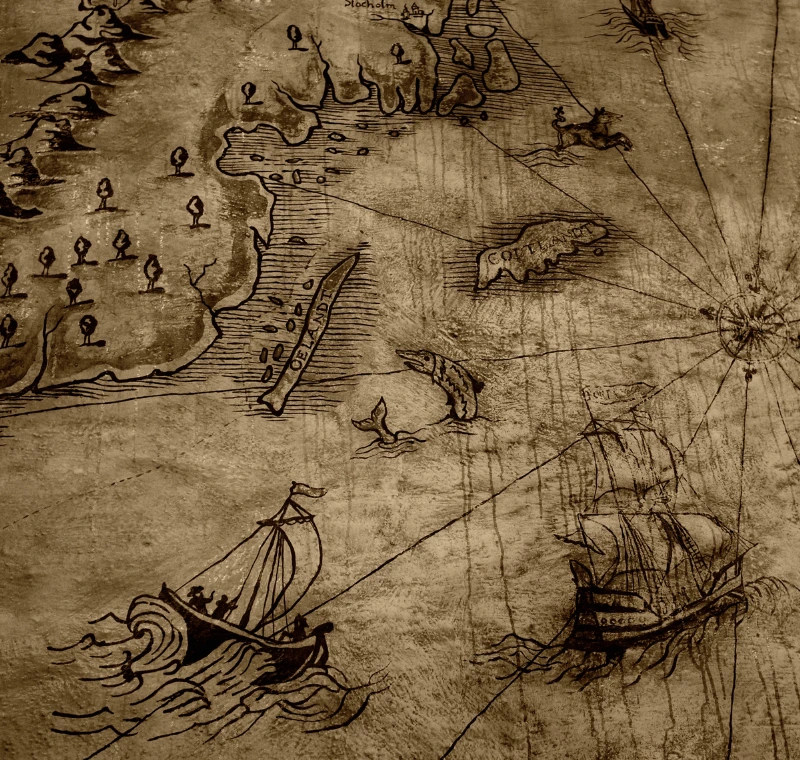
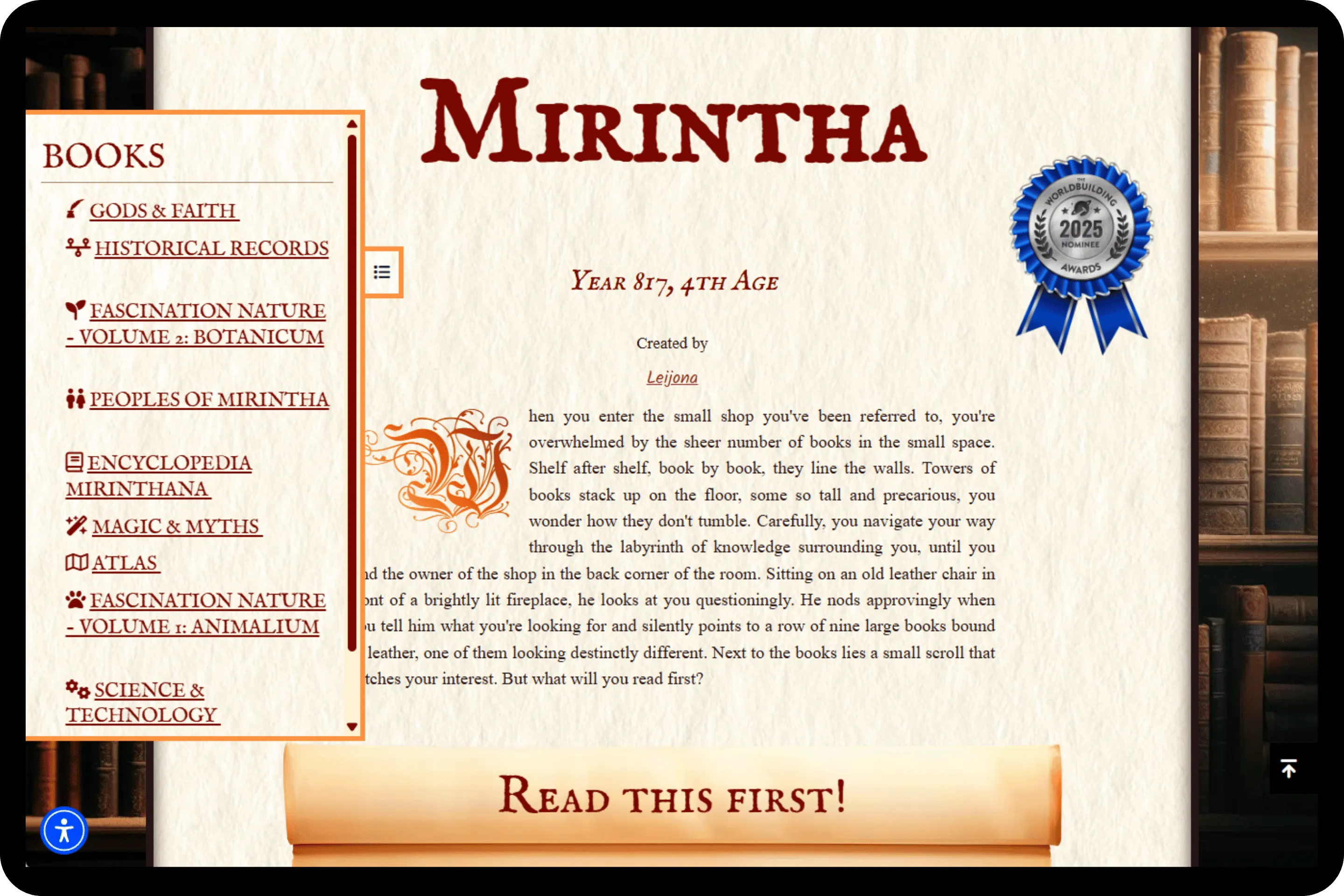
Personality isn't limited to characters, either. It works in your worldbuilding tools too. One award-winning map on World Anvil, created by Strixxline, is packed with funny asides, sarcastic descriptions, and the hilariously destructive exploits of a pet cat. Hiding easter eggs of lore inside interactive maps like this — and giving them personality — is a great way to get your players and readers hunting for hints about what's coming, and building anticipation along the way.
That anticipation is a critical part of Dinniman's strategy, too. Because diegetic exposition explains things while pulling readers into the narrative, and comedy and characterization are why none of it feels like homework. But there's a third trick that kicks in once the critical information has actually been revealed: how you keep people invested in what happens next.
Purpose: Crafting Load-Bearing Lore
Dungeon Crawler Carl is full of ominous warnings about the cost of power. Every spell, weapon, and skill comes with a price. That idea of hidden costs isn't new to fantasy, but what's clever here is that the series advertises these drawbacks up front, rather than hiding them.
Item descriptions don't just say what something does. They state outright what it costs to use: your health, your sanity, or literal bones from your body. These warnings function as a Chekhov's gun. The audience knows the terrible choice to use it or not will eventually come due, probably at the most heartbreaking moment possible.
Sometimes these same descriptions set up satisfying wins instead of costs. Carl's character class is "Compensated Anarchist" (essentially, an explosives expert) and the series loves ending boss battles with a literal bang.
In both cases, the lore attached to an item is really plot setup. The fact that the audience can see it coming is what drives anticipation. This works with implied knowledge, too. If your audience is gamer-savvy, simply giving a cat the Magic Missile spell, without further explanation, tells them chaos is imminent.
This isn't gratuitous. It's plot-relevant, because Dinniman has built a world that mechanically rewards spectacle. It's not enough for Crawlers to kill monsters, or each other. They have to do it with style. Some descriptions exist purely to set up an over-the-top, often bloody battle where Carl and Princess Donut might level a city block or drop a castle on their enemies. There's an actual in-world, mechanical reason for the action to be as flashy as it is. Which is what makes the lore load-bearing rather than decorative.
For your own work: try to make every description hook your audience, either by building dread or hyping up expectations, or ideally both. Share load-bearing lore that sets up a payoff your audience will actually be hungry for. That's what creates momentum and stakes.
This matters just as much for stat blocks. In RPG and LitRPG worlds, a standard healing potion is usually the same every time. Which means the details need to stay consistent and easy to find. World Anvil's library of thousands of statblocks lets you start from an existing template, customize it with your own load-bearing lore and costs, or build something entirely your own. Then embed it directly into your worldbuilding articles, so you never lose track of how many hit points a Bad Llama has or how much a Standard Healing Potion actually heals. As Dinniman proves, this information isn't decorative. It shapes reader expectations, and it needs to be documented carefully.
The Three-Part Checklist
Even if you're not a Dungeon Crawler Carl fan, you probably want people to love your work as much as its readers love that series. You can steal Dinniman's approach to exposition by running every passage through three questions.
1. Why does the audience need to know this?
Make sure any passage of exposition earns its place. Does it serve the story? Is it setting up a climax or an obstacle? Does it create a choice for your players or characters? If it doesn't have to be there, consider cutting it or saving it for later. You'll protect both your length and your audience's attention span.
If the audience does need the information, decide deliberately how to deliver it: hang a lantern on it to build dread or anticipation, or plant it quietly so it pays off later when the moment is right. Either is valid, but make the choice on purpose, so the information creates the experience you actually intended.
2. Who's sharing the information and why?
Once you know why the information belongs in your story, decide how it gets onto the page or into your game. If a character is delivering it, give them a motivation: a rival showing off, a mentor trying to steer the protagonist's choices, a villain gloating. This turns narration into characterization. And if you need it, it gives you a built-in excuse for an unreliable narrator, which creates more story down the line.
3. Whose perspective is the information filtered through?
Finally, ask who your audience surrogate is, and why this information matters to them right now. Is a player character learning about tax law because their favourite NPC just got arrested under it? Is your young wizard finally grasping the third rule of magic in remedial class, because they failed their exam?
This is the emotional core of exposition. The information might matter for your story in the long run, but it also has to matter to your characters in the moment they learn it. That's what makes an audience excited about your lore, and what keeps them along for the ride.
The Takeaway
This is how Dungeon Crawler Carl blows straight through "show, don't tell" as a rule: because it's doing everything else right. There's an enormous amount of exposition packed into these books, but because each piece has a point of view, a personality, and a job to do, it's fun and engaging rather than exhausting.
Run your own exposition through these questions:
- Who is receiving this information, and are they filtered through someone with something at stake? Route information through a POV character with skin in the game. Or in a campaign, let players learn a fact because something they care about is now at risk, rather than handing it to them as a lore dump between sessions.
- Who is presenting it, and what do they want? Give every explainer a motive beyond simply informing the audience: a rival showing off, a mentor steering choices, a villain gloating. At the table, never let a rulebook fact arrive in a neutral voice; have it come from an NPC who's personally invested, and let your players be suspicious of the bias.
- Does the information create an immediate choice or a future payoff? After drafting any exposition, ask what changes in the very next scene because the reader now knows this. If the answer is "nothing yet," cut it, compress it, or attach it to a decision the character has to make right then. At the table, make sure any mechanic or lore you explain unlocks an actual decision: a fork in the dungeon, or a choice about who to trust, rather than sitting inert.
If all three are present, you're not infodumping. You're staging information as an event. And making it simply unskippable.
Now grab your hammer, and go worldbuild!

Learn worldbuilding methods & storytelling techniques from World Anvil experts to level-up your next novel, original D&D campaign setting or other creative projects.
.png)

Popular articles


Become a World
Anvil member
.webp)