What Is Cozy Fantasy? Steal the Tricks That Make This Genre So Popular

An orc abandons adventuring to open a coffee shop. A monk travels the wilderness serving tea. A family tries to navigate their newly-turned werewolf daughter's first day at magical primary school.
These stories have magic, monsters, and imaginary worlds, but they're a world away (no pun intended) from the epic battles of The Lord of the Rings, the sprawling scale of A Song of Ice and Fire, or the gritty stakes of The Witcher.
Whether or not you're a cozy fan yourself, the genre's appeal is undeniable. So what draws people in? And more importantly, how can you harness that appeal for your own work, regardless of what genre you're writing in? Let's unpack it, and pull out some tools you can steal for yourself.
What Is Cozy Fantasy? Is It Really Just Fantasy Without a Plot?
Cozy fantasy is, broadly, comforting, lower-stakes fantasy. Instead of battles and political maneuvering, it focuses on ordinary life within a fantasy world. Characters like coffee shop owners and mapmakers rather than warriors and explorers.
Some people assume cozy fantasy is just "fantasy without a plot," but that's not true of the genre done well. Characters still face real trials, with difficulties to overcome and plenty to lose. The stakes and resolutions just live on a personal scale rather than an epic one. Shops might burn down, but usually no nations fall along the way.
So why do people love cozy? And what can the rest of us borrow from it to make our own stories more appealing?
Slice of Life: Juxtaposing the Familiar and the Strange
One answer: cozy fantasy satisfies our natural curiosity about daily life in another world. In a world of magic and fantasy species, how does someone do their laundry? Send a message? Bake a cake? And how does that change from culture to culture?
We already know people find daily life fascinating. It's why documentaries, books, and museum exhibits about how humans handled mundane tasks across history are so popular. Cozy fantasy offers that same slice-of-life fascination, but set somewhere magical, where chores blend with wonder. A sentient sourdough starter, a magical map shop, or a pet dragon that keeps accidentally setting the rug on fire. These details connect with audiences because they feel familiar, yet fresh.
Steal It: Slice of Life
Here's the good news: this technique works in any genre, not just cozy. In A Wizard of Earthsea, Ursula K. Le Guin grounds us in Ged's culture through small, everyday tasks. In Assassin's Apprentice, Robin Hobb shows us the mundane rhythms of daily life even for a character apprenticed to a literal assassin. Alex's lasagna in The Expanse is another example. It's a small, everyday detail that speaks volumes about life aboard the ship. These are high-stakes, epic works of fantasy and sci-fi, yet they all use this grounding technique to connect with readers and showcase their worldbuilding through ordinary action.
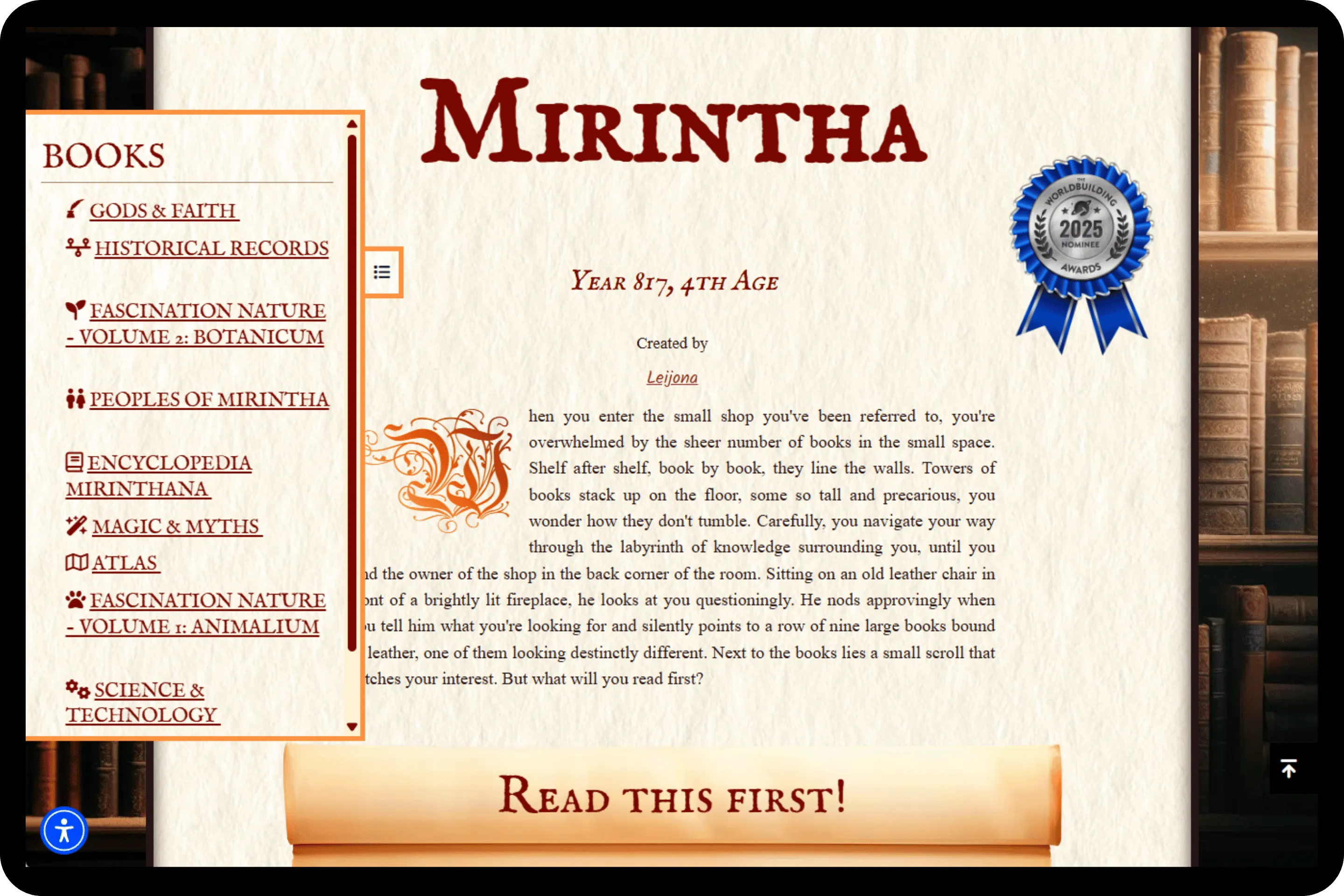
This is where the real worldbuilding work lives. Whatever genre you're writing in, it works better when it's organized so you can return to it again and again without losing track of the details. That's exactly the gap a worldbuilding tool like World Anvil is built to fill: a wiki for the world in your head, with interactive maps, timelines, family trees, and everything else you need to build a world that feels real and grounds your audience in the everyday.
This everyday worldbuilding also works because your audience can connect with it more easily than with the rest of your book. Few of us have charged into battle, but most of us have scrubbed a floor or washed vegetables.
But isn't cozy fantasy just... silly? Superficial? Actually, you might be surprised...

Safety Creates Space for Depth
Cozy is deliberately a feel-good genre. Part of that is the promise of a happy ending. Not necessarily the ending you expect, and not for everyone, but happy enough. And as already noted, the stakes stay personal. Characters may get kidnapped, but we trust they'll be okay. We're rarely fearing the fall of civilization or the end of the world.
That combination creates a sense of safety, and the best cozy writers use that safety as an opportunity. Because when readers or players feel safe, you can hit them with the big questions:
- Monk and Robot asks: what do we really need, as humans?
- Stardew Valley asks: what does it mean to escape crushing, soulless capitalism?
- One Quiet Year asks: how do we rebuild, when everything we know is gone?
These are huge, meaning-of-life-sized questions. In a different setting, they might feel overwhelming. It might be the kind of thing that makes you throw a book across the room or rage-quit a game. But cozy fantasy creates an atmosphere safe enough to explore them softly.
Steal It: Safety Creates Space for Depth
How do you use this outside of cozy? Think of the "beach episode" trope from anime. Characters take a break from the end of the world to just have some fun. A literal beach episode might cause tonal whiplash in your story, but there's no reason you can't:
- Send your characters to a festival or a funeral
- Carve out time for a fireside camp scene
- Make it someone's birthday because crew morale matters too
- Give them a cozy place to spend the night, and a temporary sense of safety. Rivendell in The Lord of the Rings serves exactly this purpose, letting the characters heal before the next leg of their journey
These are reaction beats: moments where your characters slow down and process what they've faced so far. They're not just pacing tools. They give your story room to reflect on the philosophies driving your characters and the deeper truths behind your themes. They're the secret sauce that deepens the emotional impact of your stories and campaigns. Use these softer spaces to unpack your big questions, and they'll pay dividends throughout your work.
Cozy Is a Healing Narrative
This holds true on a larger scale, too. Cozy fantasy is often associated with the found-family trope, and there's a reason for that. At its core, cozy is frequently a healing narrative; one long reaction to a traumatic event.
- The Grimoire Grammar School is about surviving a werewolf attack.
- Magic, Maps and Mischief is about escaping a racist society and building a new life.
- Legends & Lattes is about leaving behind a violent past and slowly learning to process trauma.
- The Spellshop follows a character rebuilding their life after the capital — and their life's work — literally burns to the ground.
In each case, the entire story functions as one extended reaction beat to a major trauma, and the plot is the process of coming to terms with it.
Steal This: Healing Narratives
Giving a character trauma isn't groundbreaking on its own. But building a space for healing is a technique that crosses genres freely. It works just as well in space opera, steampunk, sci-fi, or epic fantasy. Through self-acceptance, growth, and found family, even if that "family" is a band of rebels standing by you while the Empire hunts you down. This kind of narrative is deeply satisfying to an audience. That's why it works so well in cozy fantasy, and why it's easy to bring into your own work in progress.
Cozy Touches Your Pleasure Buttons
Somehow this whole discussion has gone on for a while without mentioning food, apart from cake and lasagna. Well: food is cozy, okay?
And it's not just food. Cozy fantasy is famous for its pets, its soft furnishings, its warm spaces lit by flickering firelight. All of this points to a larger truth: cozy fantasy is remarkably good at hitting our pleasure buttons, i.e. the things that are universally pleasurable to us because of how we've evolved. That's a huge part of why the genre appeals to such a wide audience.
Steal It: Pleasure Buttons
Once you understand why people are drawn to certain details, you can use that knowledge to make your own worldbuilding addictive. The kind readers and players keep coming back to, adventure after adventure. This is a deep enough topic that it deserves its own dedicated exploration: how to build pleasure buttons directly into your worldbuilding, your fiction, and your games.
So, are you a cozy fan? Or are you just here to steal their tricks for your own work in progress? Either way, it's worth thinking about how these techniques can serve whatever story you're building.
Now grab your hammer, and go worldbuild!

Learn worldbuilding methods & storytelling techniques from World Anvil experts to level-up your next novel, original D&D campaign setting or other creative projects.
.png)

Popular articles


Become a World
Anvil member
.webp)